
The Assertiveness Trait Predicts Who Will Speak Up and Who Will Stay Silent
Most expensive workplace problems trace back to a conversation nobody was willing to start. The assertiveness trait measures the comfort a person has to express themselves boldly, to persuade, to persist, or to speak up when the moment calls for it.

What Does the Assertiveness Trait Measure?
The assertiveness trait measures the comfort one has to express oneself boldly, to persuade, to persist, or to speak up, together with the willingness to impose oneself on another. More precisely, it measures the willingness in difficult situations to jump in and say something without outside motivation.
However, it does not measure aggressiveness, and it does not always measure the ability or willingness to talk.
Why assertiveness problems are invisible in interviews
Interviews hand candidates a script where speaking up is not only safe but expected. Someone who avoids difficult conversations at work will still answer your questions readily, because your questions cost them nothing. Asked point blank whether they are assertive, almost every candidate says yes, which is exactly why that question is worth avoiding.
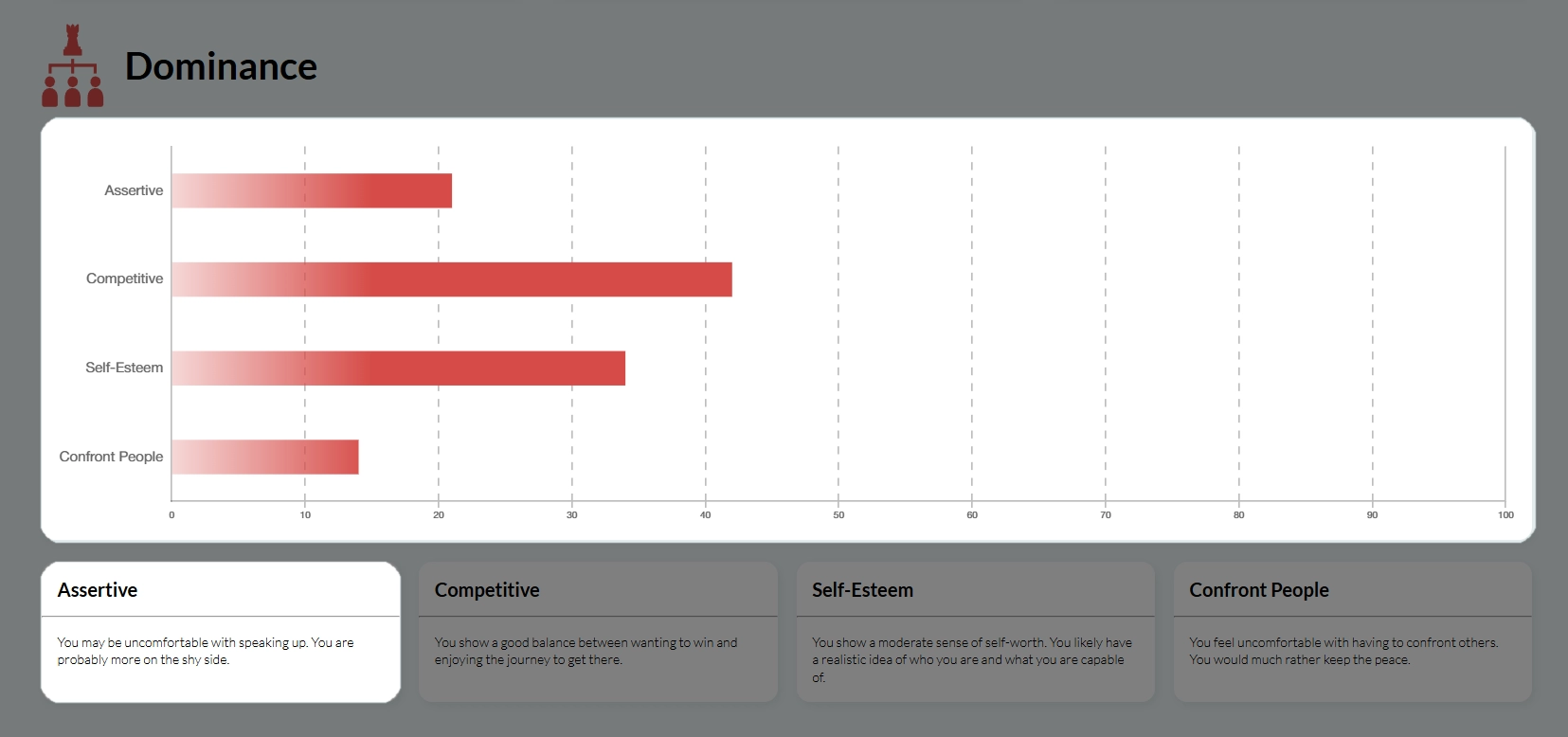
What the Assertiveness trait helps you evaluate before you hire

Two different scores share this name. This page covers Assertiveness, scored inside the Behavioral Quadrants, which measures the willingness to actually be bold. The separate Assertive trait sits among the People Traits on the Aptitude assessments and scores the degree a person believes a bold approach works. Confirm which chart you are reading before comparing any numbers.
Why the Assertiveness Trait Matters in Hiring
This trait cuts both ways. Too little of it leaves problems unspoken until they are expensive, while too much of it can overwhelm the people around it — which is why the balanced band, not the top of the scale, is what most roles want.

Silence Has a Cost
Low scorers cause delays and problems when they do not speak up. The cost lands in missed deadlines and late escalations rather than in visible behavior.

A Ceiling on Supervision
Span of control is limited at the bottom of this scale. Low scorers should not run more than three subordinates, and never another supervisor with subordinates.

Boldness Can Overshoot
High readings are not automatically better. Assertiveness may turn into aggressiveness, and at the extreme it can overwhelm people and drive out their initiative by fear.

How low Assertiveness scores show up on the job
The cost of this pattern reaches the P&L before it reaches a performance review. Issues arrive on your desk weeks late, already larger and already more expensive.
Learn more about our Assessments
"*" indicates required fields
How the Assertiveness Trait Is Scored
Five ranges cover this trait, and the balanced band begins at 40. Read each range for what it offers and what it costs, and treat a 0 or a 100 with extra care, since extremes here cause major problems in half of cases.

Extremes at either end deserve equal caution — a 0 and a 100 both cause major problems in about half of cases.
Low (0 - 39)
Uncomfortable speaking up when they know they should, which brings delays, and below 15 that discomfort turns severe. Workable below three subordinates but never over another supervisor, and a manager can encourage them to voice their concerns openly.
Medium (40 - 60)
Shows a good balance of assertiveness, and the assessment states this range would not adversely affect any position. It is the most straightforward reading on the trait, so move on and compare the rest of the quadrant instead.
High (61 - 100)
Influences others without difficulty and gravitates toward leadership roles, though assertiveness can at times turn into aggressiveness. Above 96 the person controls people almost compulsively, which risks overwhelming others and driving out the initiative of everyone around them.
Assertiveness is one of four traits measured together in the Controller and Assertive quadrant
The three traits scored beside it are the ones the assessment itself names as closely related, and each combination sharpens what a single reading can tell you.

Empathy
High Empathy makes tough love difficult. When assertiveness and confronting read low alongside it, managers are admitting they will not deal effectively with offensive subordinate behavior.

Confront People
Confront People covers facing problem situations head on, while this trait is more a willingness to influence others with less emphasis on confronting. Read them together.

Competitiveness
Competitiveness is the desire to prevail and win business opportunities. When this pair both read low, candidates are admitting they will not push to close sales. Read them together.

Self-Esteem
Self-Esteem reflects a person's opinion of their own worth, and high readings indicate leadership potential. Beside high assertiveness, expect somebody who naturally takes the lead.
Controller / Assertive Quadrant
Assertiveness is one of four readings that build the Controller and Assertive quadrant, the direct and persuasive profile positioned as the opposite of Supporter and Empathy.

Best Practice: Assessment results support your hiring decisions, they do not replace them. Always read the assertiveness trait score alongside the full profile and your role benchmarks before drawing a conclusion.
How to Interpret Assertiveness Results
One trait result by itself is not dependable for anything, and this one is no exception.
Read it inside the whole profile, and stay especially careful with a salesperson who already knows how to answer these questions the way you want.
What to Do Based on Your Assertiveness Score
Keep this candidate away from roles that control people. Ask how they chase an unresponsive customer, and a zero here causes major problems half the time.
Cap the span of control at three subordinates, never over another supervisor. Plan to encourage them openly, so voicing a concern feels safe once they start.
Good balance, and this range will not adversely affect any position. Move to the rest of the quadrant and compare the profile against your role benchmark.
Expect comfortable influence and a pull toward leadership. Watch whether persistence tips into aggressiveness, particularly in customer service and other roles that reward a lighter touch.
Probe for overbearing behavior directly. People here can overwhelm others and drive out initiative by fear, and 100 deserves exactly the same caution as a zero.
Assessment results support decisions, they do not make them. Always interpret scores in context: the specific role, interview performance, references, and your organization's culture.
The Assertiveness Trait Matters for Every Role You Hire
Some positions ask a person to influence others every hour of the day, while others rarely ask at all, so benchmark this score against the job in front of you.
Roles where Assertiveness is especially critical
| Role | Why it matters |
|---|---|
| Sales Closer | Closing is the willingness to openly ask for the sale, ask for the money, and persist until the customer finally decides one way or the other. |
| Supervisor of Supervisors | Low scorers must definitely not be put in charge of another supervisor who has subordinates, because unspoken problems then travel down two levels instead of one. |
| Team Manager | A person reading below 40 should not be placed in charge of more than three subordinates, since delays created by silence multiply with every extra report. |
| Telemarketing Representative | Telemarketing sits among the tests most closely tied to this trait, because persuading a stranger over the phone depends entirely on jumping in without outside motivation. |
Relevant for all role types

Sales Representative

Customer Service Representative

Account Manager

Team Lead

Operations Supervisor

Collections Specialist
Purchasing Agent

Project Manager
If any of these situations sound familiar, this assessment is for you
Want to see a sample report?
Get a real example of what the IC or SL Behavioral report looks like — scores, trait breakdowns,
and interpretation guidance included.
Not sure which assessment fits? Our team can help you choose based on the role, hiring volume, and depth of evaluation you need. Book a free demo →
Frequently Asked Questions
The assertiveness trait measures the comfort one has to express oneself boldly, to persuade, to persist, or to speak up, and the willingness to impose oneself on another. In sales terms, it is the willingness to openly ask for a sale, ask for the money, and close.
Let Our Team Help You Find the Right Assessment
Tell us which positions you are filling, and we will match the right assessment to them and configure the benchmarks your team should be scoring against.
Learn more about our Assessments
"*" indicates required fields