
Understanding Human Nature Trait Measures Insight Into People Before You Hire
The understand human nature trait is one of the People Traits scored on the Aptitude assessments. It separates the candidate who anticipates a reaction from the one who gets surprised by it every time.

What Does the Understand Human Nature Trait Measure?
The understand human nature trait measures the knowledge, insight or understanding of how people will respond to situations in general. In other words, it scores whether somebody can tell what is likely to happen to people who follow certain paths.
What the understand human nature trait is not
It does not measure education level. It also does not measure an understanding of how to deal with people, which the assessment scores separately as Know How to Deal with People. Insight into behavior and skill at handling behavior come apart often enough to justify two scores.
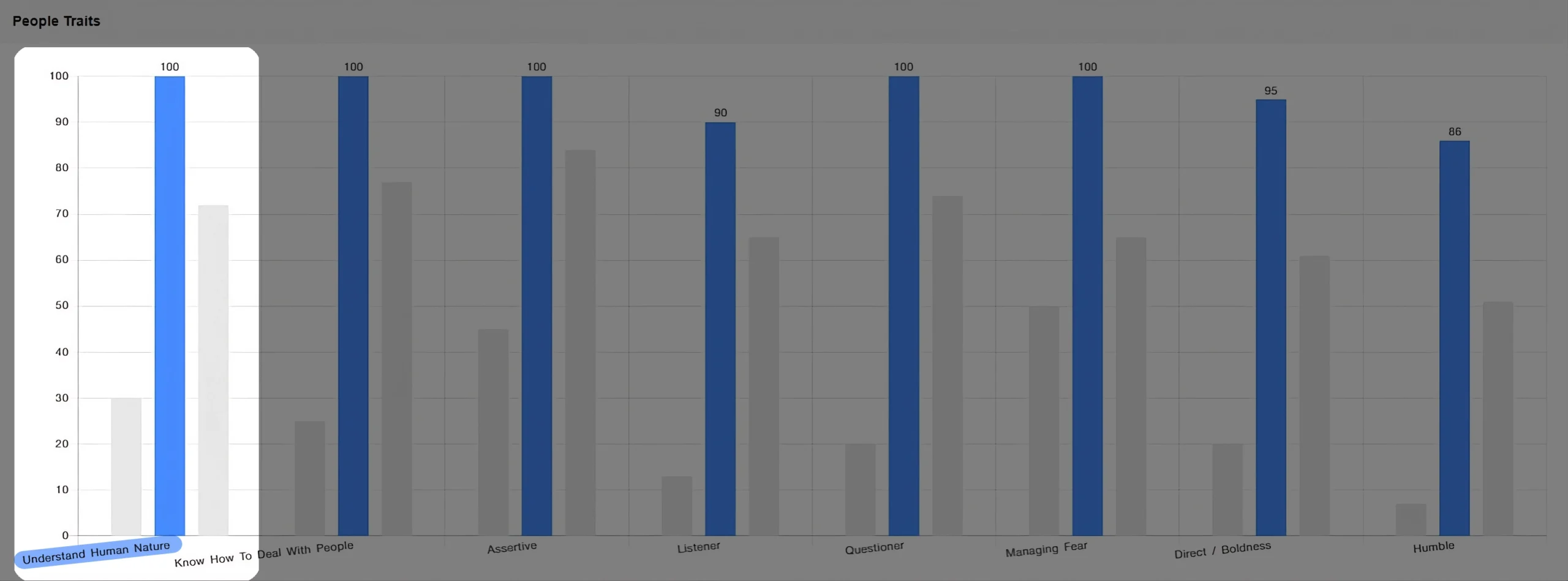
What the Understand Human Nature Trait Helps You Evaluate Before You Hire

Read a very low score carefully. Each of the ten questions offers five answers with only one correct, so the assessment notes that a candidate could reach 20 by guessing alone. Treat anything under 25 as close to no demonstrated knowledge.
Why the Understand Human Nature Trait Matters in Hiring
This trait scores knowledge, not temperament. Because the assessment treats it as half of a pair, the number on its own says less about a candidate than the average it forms with Know How to Deal with People.

The Pair Beats the Single Score
The assessment states twice that the average of this trait and Know How to Deal with People matters far more.

Knowledge, Not Personality
Candidates answer scored situational questions rather than describing themselves, so the result reflects what they actually know about other people.

Insight Without Method Stalls
A high reading beside a low paired score still produces a borderline supervisor. Seeing the situation is not handling it.

How a low Understand Human Nature score shows up on the job
The gap appears in situations nobody briefed the person about. Consequently, the cost lands on the very people they were supposed to read.
Learn more about our Assessments
"*" indicates required fields
How the Understand Human Nature Trait Is Scored
Ten questions produce a score from 0 to 100, and the three bands below summarize the picture.
Because every band reads differently depending on the paired trait, never interpret this number in isolation.
Low — under 45
Little demonstrated understanding of how people respond. Paired with a low second score, the assessment plainly predicts a poor supervisor.
Medium — 45 to 60
An average reading on its own. With a good paired score, expect above average understanding of influencing other people positively.
High — 61 to 100
Understands how people respond in general. With a good paired score, expect somebody who also handles and influences others well.

The band cutoffs differ between the two paired traits. Good starts at 61 here and at 62 on Know How to Deal with People, while High starts at 71 here and at 80 there, so compare each score against its own bands rather than against the other.
Understand Human Nature is the first of the People Traits on the Aptitude assessments
Each trait in this set scores knowledge about people rather than personality, and moreover one of them changes what this score means entirely.

Know How to Deal with People
The paired trait. Their cutoffs differ, so compare each score against its own bands rather than against the other one.

Supervisor Strength
Supervisor Strength combines these questions with the paired trait, so this reading feeds directly into that seventeen question composite score.

Trainer
The assessment names Trainer closely related. Teaching depends on predicting where somebody struggles, which is exactly what this trait scores.

Initiative
The assessment names Initiative closely related. Reading a situation correctly still needs somebody who is willing to act on it.

Listener (Aptitude)
The assessment names Listener closely related. Understanding how people react rarely develops without placing importance on listening to them first.
People Traits
The category this trait belongs to, where scored questions test knowledge about people instead of asking them for self-description.

Best Practice: Never read this score by itself. Average it with Know How to Deal with People, and compare each against its own bands, since Good starts at 61 here and at 62 there, while High starts at 71 here and at 80 there.
How to Interpret Understand Human Nature Results
Every range on this trait reads differently depending on the Know How to Deal with People score beside it. Both the IC Aptitude and the Sales Aptitude tests include this trait.
What to Do Based on Your Understand Human Nature Score
Guessing alone could reach 20 here, so treat this as no demonstrated knowledge. Check Know How to Deal with People before considering roles that lead others.
If Know How to Deal with People reads high, expect average understanding. If both read low, the assessment plainly predicts a poor supervisor of other people.
An average result. With a good Know How to Deal with People score, expect above average understanding of how to deal with and influence people positively.
With a good Know How to Deal with People score, this person understands how people respond and influences them positively. A low pair means borderline supervision.
The strongest reading available. With Know How to Deal with People also good, expect somebody who handles and influences others well rather than reading them accurately.
Assessment results support your hiring decisions, they do not replace them. Always read the understand human nature trait score alongside the full profile and your role benchmarks before drawing a conclusion.
The Understand Human Nature Trait Matters for Every Role You Hire
Because some positions run on reading people and others barely touch it, benchmarks define what each reading means. Therefore, review results against the benchmark for the specific job.
Relevant for all role types
| Role | Why it matters |
|---|---|
| Supervision | The assessment builds a dedicated Supervisor Strength score from these questions, which signals how much supervision depends on this knowledge. |
| Project Management | Project Manager Strength also combines these questions with the paired trait, since delivery depends on predicting what other people do. |
| Customer Service | Reading a frustrated caller correctly decides whether the call recovers, and strength here can carry a lower logic side score. |
| Coaching and Training | Coaching depends on knowing why somebody behaves as they do, and the assessment names Trainer among the closely related traits. |
Roles where Understand Human Nature is especially critical

Team Supervisor

Customer Service Rep

HR Business Partner
Sales Manager

Account Executive

Project Manager

Corporate Trainer

Operations Manager
If any of these situations sound familiar, this assessment is for you
Want to see a sample report?
Get a real example of what the Sample IC Ability report looks like — scores, trait breakdowns,
and interpretation guidance included.
Not sure which assessment fits? Our team can help you choose based on the role, hiring volume, and depth of evaluation you need. Book a free demo →
Frequently Asked Questions
The understand human nature trait measures the knowledge, insight or understanding of how people will respond to situations in general. In short, it scores whether somebody can tell what is likely to happen to people if they follow certain paths.
Let Our Team Help You Find the Right Assessment
Tell us which positions you are filling, and we will match the right assessment to them and configure the benchmarks your team should be scoring against.
Learn more about our Assessments
"*" indicates required fields