
The Initiative Trait Measures Understanding of When to Act Unasked
The initiative trait is one of the People Traits scored on the Aptitude assessments. It measures whether a candidate understands that some things need doing before anybody asks, rather than whether they will actually step forward and do them.

What Does the Initiative Trait Measure?
The initiative trait measures the understanding of the importance of acting on one's own without being told to act.
In other words, it scores whether somebody recognises that waiting for an instruction is sometimes the wrong choice.
What the initiative trait is not
It is not insubordination. Acting without being told means moving on something that clearly needs doing, rather than overriding a decision or ignoring an instruction, so a high reading points to the first and never to the second.
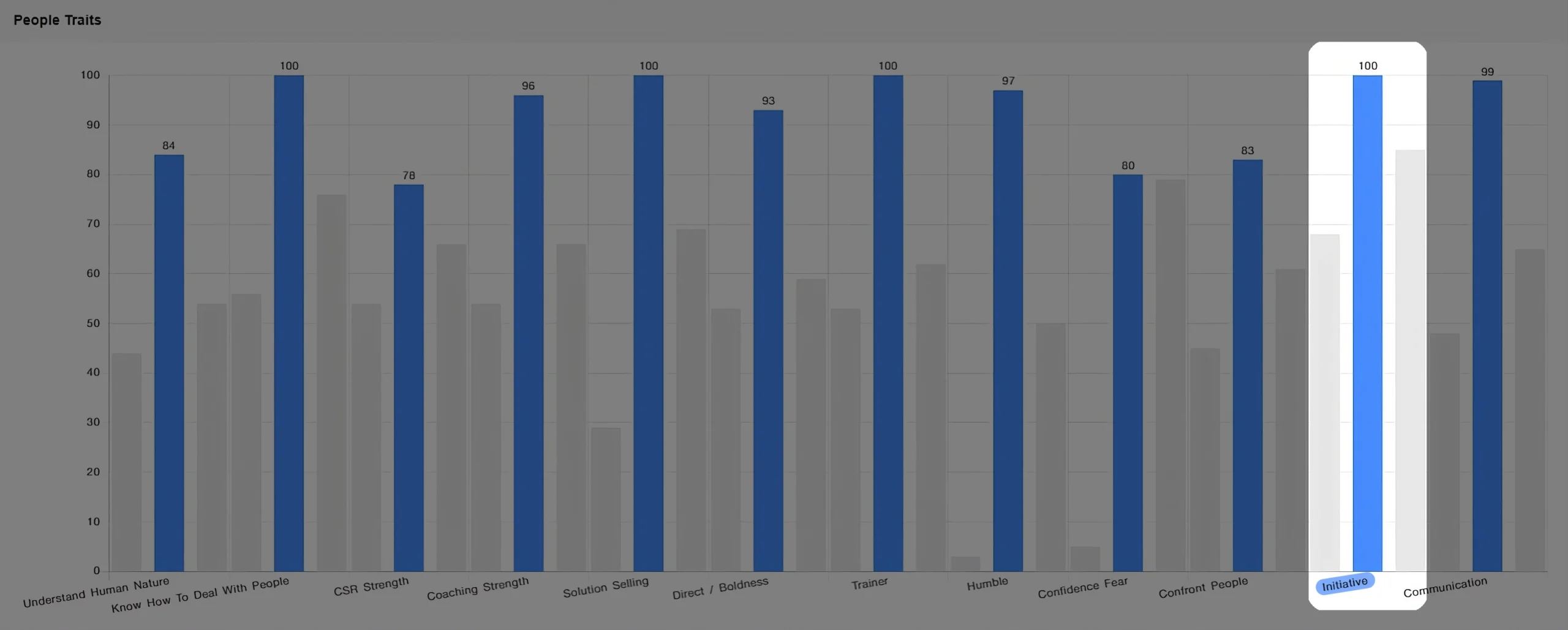
What the Initiative Trait Helps You Evaluate Before You Hire

Ask what they started last year that nobody asked them to start. A blank answer tells you more than a modest one, since the question is whether acting unprompted occurs to them at all.
Why the Initiative Trait Matters in Hiring
Several neighbouring traits name this one, because acting unprompted sits underneath what each of them measures.
Because it scores recognition rather than behavior, it belongs beside the behavioral profile rather than on its own.

Understanding, Not Willingness
This score covers whether somebody recognises the need to act. Whether they then act belongs to the behavioral profile instead.

Not Insubordination
Acting unasked means moving on something that clearly needs doing, so a high reading is no warning about following direction.

Named Across the Sales Set
Customer Service Strength, Solution Selling and Assertive all name it, because each one turns on moving before anybody prompts you.

How a low Initiative score shows up on the job
The work still arrives, but only after somebody asks for it. Consequently, the cost shows up as management time rather than as visible failure.
Learn more about our Assessments
"*" indicates required fields
How the Initiative Trait Is Scored
Four questions produce a score from 0 to 100 across six named ranges, and the three bands below group them.
Low — under 36
A very poor to poor understanding of the need to act without being told first.
Medium — 36 to 65
A borderline to OK understanding of the need to act on one's own without instruction.
High — 66 to 100
A good understanding of that need, which becomes an excellent one from 77 points upward.

The two lowest ranges overlap in the source. Low stops below 24 and Poor starts at 20, which leaves 20 to 23 inside both. Both figures stand exactly as published, so treat a score in that overlap as the low reading.
Initiative is one of the People Traits on the Aptitude assessments
Each trait in this set scores understanding rather than personality. However, several neighbouring traits name this one, because acting unprompted sits underneath what each of them measures.

Customer Service Strength
A named relation, because recovering a frustrated customer usually means acting on something before anybody authorises the very next step.

Solution Selling
A named relation, because finding a problem and then proposing a fix begins with somebody deciding to raise it first.

Assertive
A named relation, because believing a direct approach works matters little without the sense to actually move on it unprompted.

Managing Fear
Named here as No Fear. Acting on your own risks a mistake, which is exactly what that other reading covers.

Understand Human Nature
Understand Human Nature names Initiative among its own relations, since judging when to step in depends on reading people first.
People Traits
The category this trait belongs to. Every People Trait is scored from multiple choice questions with one correct answer, so these readings measure what a candidate knows rather than how they describe themselves.

Best Practice: Read this score with the behavioral profile rather than alone. Recognising that something needs doing and starting it are different things, and only the pair tells you which you are hiring.
How to Interpret Initiative Results
Six named ranges cover this trait, and the action below each range assumes you are holding a report.
The IC and SL Behavioral Assessments and the Sales Ability Test are its closest related instruments.
What to Do Based on Your Initiative Score
Treat as no demonstrated understanding at all, and keep this candidate away from any seat where work starts without instruction.
Expect this candidate to keep waiting for direction, so plan the supervision load carefully before you finally make an offer.
Workable only where a supervisor sets the daily priorities, and confirm with Assertive before you fill any largely autonomous seat.
Compare this against your own role benchmark, since the amount of self-direction a position demands differs sharply between seats.
Place this candidate where nobody hands out the next task, and check Managing Fear to confirm they will actually act.
Check the behavioral profile before assuming this turns into real action, since recognising the need is only the first half.
Assessment results support your hiring decisions, they do not replace them. Always read the initiative trait score alongside the full profile and your role benchmarks before drawing a conclusion.
The Initiative Trait Matters for Every Role You Hire
Because the amount of self-direction a job demands differs sharply between positions, benchmarks define what each reading means. Therefore, review results against the benchmark for the specific job.
Relevant for all role types

Manager

Coordinator

Project Manager

Executive

Technician

Dispatcher

Customer Service Representative

Administrative Assistant
If any of these situations sound familiar, this assessment is for you
Want to see a sample report?
Get a real example of what the ISample IC Ability report looks like — scores, trait breakdowns,
and interpretation guidance included.
Not sure which assessment fits? Our team can help you choose based on the role, hiring volume, and depth of evaluation you need. Book a free demo →
Frequently Asked Questions
It measures the understanding of the importance of acting on one's own without being told to act. The reading covers recognition rather than behavior, so it tells you whether a candidate sees that waiting for instruction is sometimes the wrong choice.
Let Our Team Help You Find the Right Assessment
Tell us which positions you are filling, and we will match the right assessment to them and configure the benchmarks your team should be scoring against.
Learn more about our Assessments
"*" indicates required fields