
The Trainer Trait Measures Knowledge of How to Teach a Procedure
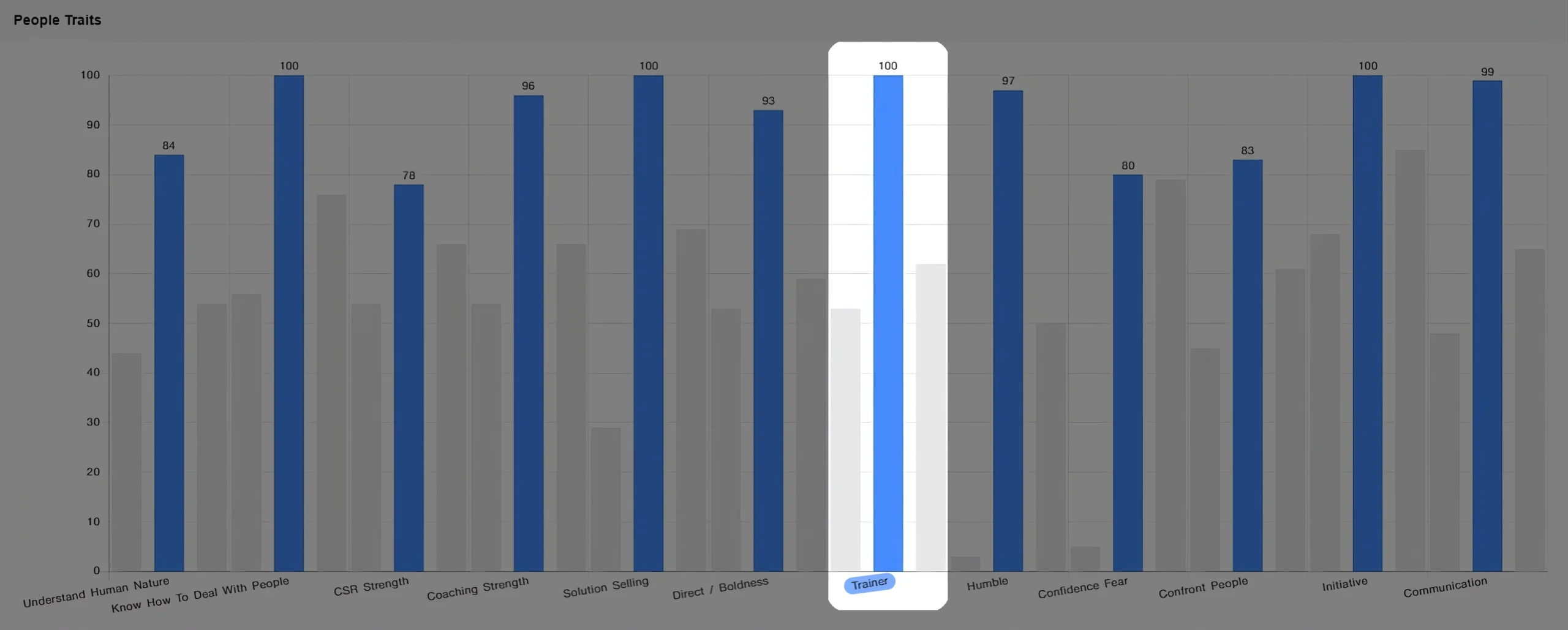
The trainer trait is one of the People Traits scored on the Aptitude assessments. It predicts who can effectively communicate a procedure to someone else and who will demonstrate it twice before moving on.

What Does the Trainer Trait Measure?
The trainer trait measures the knowledge and understanding of the best ways to teach or educate people on the theoretical understanding of a procedure or machine. In other words, it scores whether somebody knows how to explain how a thing works.
What the trainer trait is not
It does not measure the understanding or ability to coach somebody to apply or correct a behavior, which the assessment scores separately as Coaching Strength. The split is stated plainly: a trainer teaches ideas, while a coach improves the whole person.
What the Trainer Trait Helps You Evaluate Before You Hire

Seven questions carry this reading, each offering five answers with only one correct, so a candidate could reach 20 by guessing alone. Treat anything under 25 as no demonstrated knowledge, and confirm the score against a practical demonstration.
Why the Trainer Trait Matters in Hiring
This is the narrowest reading in the People Traits set, and deliberately so.
Because it scores theory rather than behavior, it answers one question only: can this person explain how the work is done?

Narrower Than Coaching
The assessment calls this less extensive than Coaching Strength, which uses nineteen questions and deals with the whole person instead.

Theory, Not Behavior
The wording is deliberate: theoretical understanding of a procedure or machine. Changing how somebody behaves is a different score entirely.

Seven Questions Only
With only seven questions behind it, the assessment leaves less room for confidence, so confirm the reading against practical evidence.
How a low Trainer score shows up on the job
The gap appears the first time somebody new has to learn the work. Consequently, the cost lands on the people being trained rather than on the trainer.
Learn more about our Assessments
"*" indicates required fields
How the Trainer Trait Is Scored
Seven questions produce a score from 0 to 100 across six named ranges, and the three bands below summarize them.
Because training load differs sharply between positions, benchmark the number against the specific job.
Low — under 41
Poor knowledge of how to teach a procedure. Under 25 guessing alone could produce the score, so read it carefully.
Medium — 41 to 60
A borderline to OK knowledge of the best ways to teach a procedure or machine on the theoretical side only.
High — 61 to 100
Good knowledge of the best ways to teach a procedure, which the assessment itself upgrades to very good above 75.

Only seven questions carry this reading. The assessment builds Coaching Strength from nineteen and describes Trainer as less extensive, so confirm a borderline result with a practical demonstration rather than the number alone.
Trainer is one of the People Traits on the Aptitude assessments
Each trait in this set scores knowledge about people rather than personality.
Moreover, the assessment deliberately keeps this reading narrower than the one beside it.

Coaching Strength
The manual pairs these two directly. A trainer teaches the idea, while a coach has to improve the whole person.
Customer Service Strength
Explaining a procedure and defusing a complaint draw on knowledge that barely overlaps, yet the manual lists both as related.

Questioner
Questioner names this trait closely related. Teaching well depends on asking what the learner already understands before explaining anything else.

Communication
Communication scores getting ideas over to other people, which is exactly the work a trainer does when explaining a procedure.

Understand Human Nature
Teaching depends on predicting where somebody will struggle, and Understand Human Nature is the reading that scores exactly that insight.
People Traits
The category this trait belongs to, and the narrowest reading in it, built from just seven scored questions in total.

Best Practice: Never assign onboarding on this score alone. Confirm Coaching Strength when the role also has to change behavior, and ask for a practical demonstration, since only seven questions carry the reading.
How to Interpret Trainer Results
Six named ranges cover this trait. Both the IC Aptitude Test and the Sales Aptitude Test include it.
What to Do Based on Your Trainer Score
Guessing alone could reach 20 here, so treat this as no demonstrated knowledge. The assessment calls the ability to teach a procedure or machine very poor.
A poor knowledge of how best to teach a procedure. Do not put this candidate in sole charge of bringing new hires up to speed here.
A borderline knowledge of the best ways to teach a procedure or machine. Workable only where an experienced trainer stays involved in the whole handover process.
An OK knowledge of the best ways to teach a procedure or machine. Compare it against your role benchmark, since training load differs sharply between positions.
A good knowledge of the best ways to teach a procedure or machine. Strong for any position that regularly brings new hires up to full speed.
A very good knowledge of the best ways to teach a procedure. Confirm Coaching Strength separately if the role also has to change how people behave.
Assessment results support your hiring decisions, they do not replace them. Always read the trainer trait score alongside the full profile and your role benchmarks before drawing a conclusion.
The Trainer Trait Matters for Every Role You Hire
Because training responsibility differs sharply between positions, benchmarks define what each reading means. Therefore, review results against the benchmark for the specific job.
Relevant for all role types

Corporate Trainer

Team Lead

Technical Instructor

Shift Supervisor

Field Service Technician

Onboarding Specialist

Operations Manager

Machine Operator Lead
If any of these situations sound familiar, this assessment is for you
Want to see a sample report?
Get a real example of what the Sample IC Ability report looks like — scores, trait breakdowns,
and interpretation guidance included.
Not sure which assessment fits? Our team can help you choose based on the role, hiring volume, and depth of evaluation you need. Book a free demo →
Frequently Asked Questions
The trainer trait measures the knowledge and understanding of the best ways to teach or educate people on the theoretical understanding of a procedure or machine. In short, it scores whether somebody knows how to explain the way a thing works.
Let Our Team Help You Find the Right Assessment
Tell us which positions you are filling, and we will match the right assessment to them and configure the benchmarks your team should be scoring against.
Learn more about our Assessments
"*" indicates required fields